
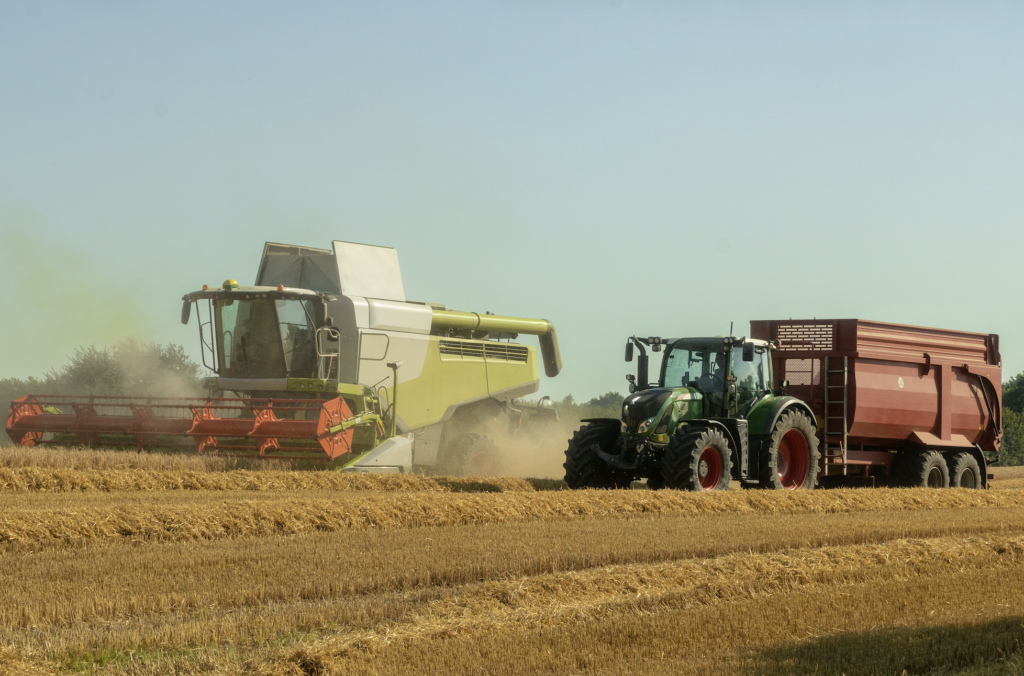
The header on your harvester flashes a warning. The tractor that has run every season for twelve years finally gives out. It is three weeks before harvest and replacing or repairing critical equipment is not optional. For Australian farmers, equipment failure at the wrong moment is not just an inconvenience. It is a direct financial threat to the entire season’s income.
The good news is that farm machinery loans exist precisely for situations like this. Whether you need to replace a harvester overnight, finance a tractor at short notice, or fund essential agricultural machinery before a narrow weather window closes, the right finance solution can move as fast as your operation demands. This blog walks you through how emergency agriculture equipment loans work, what lenders look for, and how to give your application the best possible chance of a fast approval.
Why Harvest Delays Can Cost Australian Farmers Thousands
Australian agriculture runs on tight seasonal windows. Grain farmers in Western Australia, cotton growers in Queensland, and horticulture producers across Victoria and New South Wales all face situations where missing even a few days of peak harvest conditions can translate directly into yield loss, quality downgrades, or failed contracts.
When critical equipment breaks down during this period, every hour counts. Waiting weeks for a standard bank loan to process is simply not a viable option. The cost of delay, whether measured in unharvested crops, spoiled produce, or breached supply agreements, can easily exceed the cost of the equipment itself.
This is the reality that makes farm equipment loans such a critical financial tool for Australian producers. They are not just about acquiring assets. They are about protecting the commercial viability of an entire season’s work. Understanding how to access these loans quickly and structure them correctly can mean the difference between a challenging patch and a genuinely devastating financial setback.
When Emergency Farm Machinery Loans Make Financial Sense
Not every equipment purchase justifies a fast finance solution, but there are clear situations where moving quickly on farm machinery loans is not just sensible but essential.
The most obvious is unplanned equipment failure during a critical operational period. If your primary harvesting or cultivation equipment breaks down and cannot be repaired in time, the cost of financing a replacement is almost always less than the cost of lost production. A tractor loan arranged in days rather than weeks can protect a season’s worth of income from a single mechanical failure.
Emergency farm equipment loans also make sense when a time sensitive purchasing opportunity arises. Quality second hand agricultural machinery does not stay on the market long, and waiting for slow approval processes often means losing the asset to another buyer. Having access to fast agribusiness finance solutions puts you in a position to act when the right equipment becomes available.
Finally, there are situations where a farming operation is scaling quickly in response to favourable conditions or new contracts, and the existing equipment base simply cannot keep up. In these cases, fast approval agriculture equipment loans allow producers to capitalise on opportunity rather than being constrained by their current asset base.
How Agriculture Equipment Loans Can Be Approved Faster
Speed of approval in farm equipment loans comes down to three things: the right lender, the right broker, and a well prepared application.
Not all lenders move at the same pace. Traditional banks often have multi layered approval processes that are poorly suited to urgent agricultural finance needs. Specialist farm equipment lenders and non bank finance providers, on the other hand, frequently have streamlined assessment processes designed specifically for asset backed rural equipment finance. They understand the seasonal urgency that farmers face and structure their operations accordingly.
Working with an experienced finance broker who specialises in agricultural machinery finance also accelerates the process considerably. A broker knows which lenders on their panel can move quickly on farming equipment funding, which institutions are currently active in the rural equipment finance space, and how to present your application in a way that minimises back and forth. Rather than you approaching multiple lenders individually, a broker does the heavy lifting and directs your application where it is most likely to be assessed promptly.
Preparation matters too. Having your financials organised, your asset details ready, and a clear picture of your repayment capacity speeds up every stage of the assessment process. Lenders who might otherwise take a week to process an application can often move significantly faster when the information they need is complete and well presented from the outset.
You can explore the range of services available through Bolt Funding to understand what a structured approach to equipment finance for farmers looks like in practice.
What Farm Equipment Lenders Look for in an Application
Understanding what farm equipment lenders assess helps you prepare an application that moves quickly and securely through the approval process.
The asset itself is a primary consideration. Agricultural machinery finance is asset backed lending, which means the equipment you are purchasing acts as security for the loan. Lenders will assess the age, condition, and market value of the asset, whether it is a new tractor, a combine harvester, or specialist cultivation equipment. Well maintained, commercially viable assets with strong resale value are viewed more favourably and can attract better terms.
Your financial position and repayment capacity are also assessed. Lenders want to understand your farm income, whether that comes from contracts, commodity sales, or mixed revenue streams, and how the loan repayments fit within your cash flow. Seasonal income patterns are well understood by specialist agricultural asset finance providers, so do not assume that irregular monthly income will automatically work against you.
Credit history plays a role but is rarely the sole deciding factor with specialist lenders. Many rural finance providers take a more holistic view, particularly when the asset quality is strong and the business case is sound. If your credit history is not perfect, working with a broker who understands how to position your application appropriately is particularly valuable.
Financing Tractors, Harvesters and Essential Farm Equipment
Farm machinery loans cover a wide range of agricultural equipment, and understanding what is financeable helps you plan your approach before you approach a lender.
Tractor loans are among the most common agricultural finance arrangements in Australia. From compact utility tractors used in horticulture to large four wheel drive broadacre machines, lenders active in this space finance both new and used equipment across all major brands. A tractor loan can be structured as a chattel mortgage, a finance lease, or a hire purchase arrangement depending on your tax position and ownership preferences.
Harvester finance and combine harvester loans follow similar principles, though the asset values involved are often significantly higher. For large scale grain farmers, a quality header can represent a multi million dollar investment, and the finance structure needs to reflect both the asset value and the seasonal nature of its use.
Beyond tractors and harvesters, agricultural machinery finance covers cultivators, seeders, sprayers, balers, irrigation infrastructure, and a broad range of specialist equipment. Machinery refinancing is also worth considering if you already own equipment with equity that could be released to fund urgent operational needs.
Want a smoother way to finance rural equipment? Take a closer look at how Bolt Funding does it differently.
Choosing the Right Farm Equipment Loan for Your Operation
There is no single farm equipment loan structure that suits every farming operation, and choosing the right arrangement requires an honest assessment of your cash flow, tax position, and long term equipment strategy.
A chattel mortgage gives you ownership of the asset from day one, with the ability to claim depreciation and the interest component of repayments as tax deductions. It suits operations where the equipment will be used heavily over many years and where balance sheet ownership is a priority.
A finance lease keeps repayments lower in many cases and may allow the full lease payment to be deductible, depending on your structure. It suits operations that want to preserve working capital or that expect to upgrade equipment at the end of the term rather than hold it long term.
Hire purchase arrangements sit between the two, offering a path to ownership through fixed repayments without the asset appearing as a liability in some accounting treatments.
The right choice depends on your specific circumstances, and this is where specialist advice adds real value. A broker who understands both agricultural asset finance and the broader tax implications of each structure can help you make a decision that works beyond just the immediate emergency.
View the full suite of solutions and take a confident step toward securing the equipment your operation depends on this season.